Home › Commercial Gravel-to-Asphalt Conversions
Turn dusty, muddy lots into clean blacktop with commercial gravel to asphalt conversions in Charleston, SC. We reshape and compact your aggregate base, then install asphalt for smoother traffic and less maintenance. Ideal for retail lots, storage yards, and commercial access roads.
Precision Asphalt Charleston provides professional commercial gravel to asphalt throughout Charleston, SC, South Carolina and the surrounding area. Our licensed, insured crew delivers safe, clean, on-time work with a free estimate before anything begins. Call (854) 666-3678 or request your free quote.
Turn Your Gravel Lot Into a Reliable Asphalt Surface
If you are running a business in Charleston, you already know that a gravel parking lot or drive can cost you money. You fight dust in the dry months, mud and ruts after storms, and constant complaints about washed out areas and loose rock. Precision Asphalt Charleston focuses on commercial gravel-to-asphalt conversions that turn that headache into a clean, striped parking area or access road that reflects well on your business.
When we look at a gravel lot, we are not just thinking about putting blacktop on top. We study how water moves across your property, how delivery trucks turn and stop, where employees and customers walk, and how emergency vehicles will access the site. Those details matter in Charleston because of our frequent heavy rains, low-lying soils, and coastal flooding issues. A conversion done right solves drainage and stability problems first, then adds asphalt as the final layer.
Most commercial clients we work with are trying to fix specific issues. Maybe your gravel is washing into the street and creating a code or neighbor problem, or you are tired of regrading the same potholes every few months, or you simply need a more professional look for your tenants or customers. Our goal is to design a solution around those real problems, not just quote a price per square foot and hope for the best.
How a Commercial Gravel-to-Asphalt Conversion Actually Works
A proper commercial gravel to asphalt project in Charleston starts with a site walk and soil evaluation. Precision Asphalt Charleston checks the current gravel depth, the firmness of the base beneath it, and any soft or pumping spots that show up under heavy trucks. We also note existing drainage paths, low points that hold water, and any areas where gravel has been washing away. This first visit shapes the whole design and prevents costly failures later.
Next, we handle drainage design. On the coast, water is your biggest enemy. We use a combination of shaping the subgrade for positive slope, adding French drains or catch basins where necessary, and tying into existing storm infrastructure when permitted. Even small commercial lots in Charleston can need a couple of inlets or a swale to move water off the pavement before it can weaken the base.
Once drainage is planned, we build or correct the base. For most conversions we regrade the existing gravel, then add graded aggregate base or crushed stone to reach the right depth and compaction. For light duty car parking, 6 to 8 inches of compacted base is often enough. For dumpster pads, drive aisles, or areas used by tractor trailers, we typically thicken the base and sometimes stabilize soft soils using geotextile fabric. We compact in lifts using vibratory rollers until we achieve the density needed to support Hot Mix Asphalt without settlement.
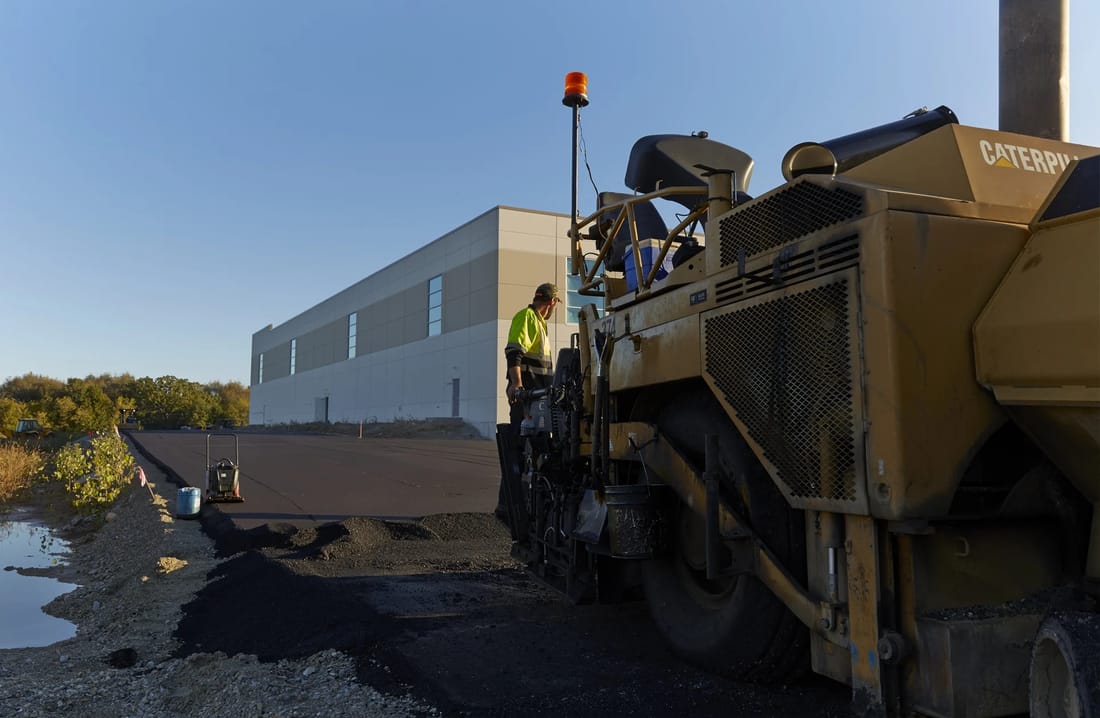
Only after the base is strong and shaped correctly do we pave. Precision Asphalt Charleston typically uses commercial-grade hot mix asphalt produced at local plants that understand our climate. For car parking with normal traffic, we often install 2 lifts: a 2 inch base course and a 1.5 inch surface course, compacted to final thickness. For heavy trucks, loading docks, or frequent turning movements, we increase thickness or upgrade to a stiffer mix design to resist rutting and shoving.
The last steps are joint sealing, striping, and any concrete transitions. We cut clean edges along existing pavement or concrete, compact the new asphalt tightly into those joints, and seal as needed to keep water out. Then we lay out stalls, ADA compliant spaces, fire lanes, and directional arrows according to the layout you approve, and coordinate any wheel stops or bollards that are needed for safety.
Design Choices That Affect Cost, Longevity, and Daily Use
Every commercial gravel to asphalt conversion we do has two main cost drivers: base preparation and total asphalt thickness. If your gravel lot has been in place for years and is dry and firm, we may be able to reuse much of that material as part of the base, which keeps costs down. If the lot stays wet, pumps when you drive over it, or sits on marshy soil, we will have to invest more in drainage, excavation, and base stabilization so the asphalt does not fail in a couple of years.
Traffic type is just as important. A small office parking lot that only sees cars can be built with a thinner asphalt section than a warehouse yard that takes loaded 18 wheelers and forklifts. Precision Asphalt Charleston will ask about your heaviest vehicles, any turning radiuses, and loading patterns. For example, the path garbage trucks use to reach dumpsters is often the first area to fail if it is not designed correctly. We may recommend a thicker asphalt section just in those travel lanes, or even a concrete dumpster pad tied into the asphalt on all sides.
You also have choices on layout and markings. Converting from gravel to asphalt is the ideal time to add defined entrances and exits, one way traffic flow, or clearly marked pedestrian walkways from parking to the door. In Charleston, many properties have tight access from older streets or alleys. A smart layout can reduce fender benders and give emergency vehicles a clear route. We use scaled site plans or on site paint layouts to line up spaces, drive aisles, loading zones, and ADA routes before we pave.
Surface options can be tailored to your use and budget. Standard black hot mix asphalt is the norm for most commercial lots. In higher visibility locations, you might choose tighter aggregate mixes near entrances for a smoother look and better reflection at night. For areas under trees, we may suggest slightly steeper slopes or additional inlets to control organic staining and standing water. Every decision has a cost impact, and we walk you through those tradeoffs line by line before you commit.
Common Problems With Conversions and How We Avoid Them
The most common failure we see in older gravel to asphalt conversions around Charleston is reflective cracking and settlement in areas that were never properly stabilized. That usually shows up along old utility trenches, old tree lines that were just covered with gravel, or filled in low spots that were not compacted. Precision Asphalt Charleston checks for those risk zones during the first visit. Where we find them, we either dig out and rebuild those sections or use geotextiles and thicker base to bridge and support the weak area.
Drainage mistakes are the second big problem. Asphalt that holds water in ponds or flat spots will age faster, ravel at the edges, and can develop ice in the rare cold snaps our area gets. To prevent this, we shoot grades or use laser levels during preparation so we maintain a continuous slope, even if it is only 1 to 2 percent. In known flood prone neighborhoods or near marshes, we plan for overtopping events and make sure the lot can shed water quickly once tides or rainfall drop.
Another issue is tie in quality where new asphalt meets existing roads, docks, or building slabs. Poor joints are easy to spot because they ravel and crack early. We saw cut the edges where we are joining, clean them, and then pave with sufficient overlap and compaction so the joint behaves like a single piece of pavement. Where gravel meets city or county roadways, we coordinate elevations so there is no lip that can cause trip hazards or damage low vehicles.
We also pay attention to how construction affects your business. Many Charleston companies cannot just shut down for a week while their lot is redone. For larger conversions we can phase the work, keeping one entrance or section open while we rebuild and pave the other. We schedule heavy base work and paving for lower traffic times, often early mornings or weekends, and provide clear cones and signage so your staff and customers know where to park each day. That planning is part of the reason our commercial clients call us back for additional phases instead of treating this as a one time transaction.
What Charleston Businesses Should Do Before Hiring a Paving Contractor
Before you authorize any commercial gravel to asphalt project, gather a few key pieces of information. Measure or obtain a site plan that shows the approximate size of the area to be paved, note any regular truck traffic and weights, and list current problem areas like standing water or recurring ruts. When Precision Asphalt Charleston visits your site, this information lets us give you a more accurate proposal and helps us design to your real conditions instead of guessing.
Ask potential contractors to explain their proposed pavement section in plain terms: total base depth, asphalt thickness, and mix type. If two quotes are very different in price, look at those numbers first. A cheaper price is often tied to thinner asphalt or less base, which can cost you more in repairs later. We provide cross section diagrams with our bids for larger projects so you can see exactly what you are buying below the surface.
In Charleston, permits and drainage approvals sometimes come into play, especially if you are increasing the amount of hard surface on your property. Verify whether your project will need city or county review. Precision Asphalt Charleston can assist with basic documentation and refer you to civil engineers when more detailed stormwater plans are required. Handling this correctly up front avoids stop work orders or delays mid project.
Finally, ask about maintenance expectations. A good commercial gravel to asphalt conversion should not need major work for many years if it is built correctly, but sealcoating, crack sealing, and occasional patching will extend its life. We provide a maintenance outline tailored to your site conditions, including how to handle deicers in rare winter events, how to protect edges from overloading, and when to schedule restriping so markings stay visible. With the right design on day one and a simple upkeep plan, your new asphalt surface will serve your business reliably for a long time.