Home › Industrial and Heavy-Duty Asphalt Paving
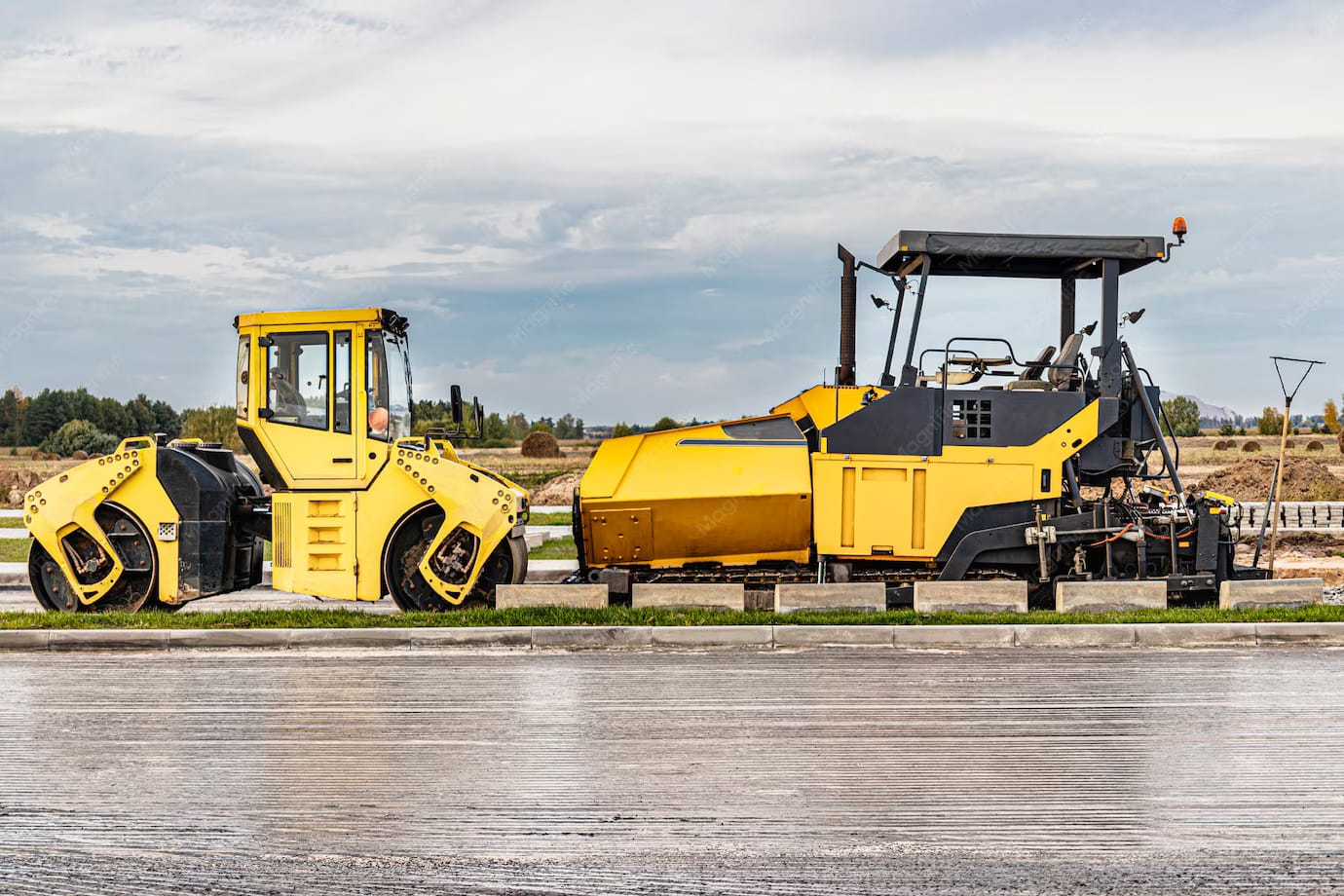
Handle heavy loads with confidence using industrial asphalt paving in Charleston, SC. We design thick section pavements for truck yards, loading docks, and warehouse lots. Proper base construction and asphalt mixes are engineered to resist rutting, shoving, and fuel spills in demanding environments.
Precision Asphalt Charleston provides professional industrial asphalt paving throughout Charleston, SC, South Carolina and the surrounding area. Our licensed, insured crew delivers safe, clean, on-time work with a free estimate before anything begins. Call (854) 666-3678 or request your free quote.

Industrial Asphalt Paving for Heavy Loads in Charleston, SC
Industrial and heavy-duty asphalt paving is a different category from standard parking lots or driveways. At Precision Asphalt Charleston, we design pavements to survive forklifts, loaded trailers, container traffic, and constant turning movements that would destroy light-duty asphalt.
Our team focuses on the specific way your site is used. A warehouse with 53-foot trucks backing into docks needs thicker sections and reinforced loading zones. A manufacturing plant with forklifts running the same paths all day needs special attention to those traffic lanes. We build each area of your site to the load it will actually carry, not a generic one-size-fits-all design.
Serving industrial parks across Charleston, North Charleston, Hanahan, and the port-related corridors, we understand the soil conditions, drainage issues, and permitting expectations that affect long-term performance. The result is an industrial asphalt surface that carries your heaviest loads, reduces downtime for repairs, and stays safe and functional in Charleston’s heat and coastal weather.
Project Assessment and Engineering for Heavy-Duty Use
Every industrial asphalt paving project with Precision Asphalt Charleston starts with a site-specific evaluation, not a generic square-foot price over the phone. We walk the property, review existing pavement failures, and map how traffic actually moves through your operation.
We consider:
• Types of vehicles and weights (yard trucks, loaded semi-trailers, container handlers, forklifts, service trucks).
• Frequency of traffic and where vehicles stop, turn, and queue.
• Subgrade conditions, including weak or saturated soils common in parts of the Lowcountry.
• Drainage paths, downspout discharge, and any ponding that will accelerate pavement failure.
From there we establish a pavement section recommendation that may include thicker stone base, heavier asphalt lifts, or concrete transition pads at dock doors. We can coordinate with your in-house engineer or provide design guidance based on South Carolina DOT and industry standards, adjusted for your actual loading instead of just “code minimum.”
Site Preparation, Grading, and Subgrade Stabilization
Industrial and heavy-duty asphalt paving fails early when the base is neglected. Precision Asphalt Charleston spends significant time on site preparation because that is what determines whether your pavement lasts 5 years or 20.
We start by removing unsuitable material, such as organic soil, construction debris, or saturated clay. In many Charleston-area industrial sites, especially near wetlands or filled land, we find pockets of soft subgrade. These are undercut and replaced with compactable aggregate or stabilized with geotextile or geogrid to spread heavy wheel loads.
Next we fine-grade to establish consistent slopes toward drains or swales. For industrial yards this is critical so water does not sit where trucks park or where pallets are staged. We use laser-guided equipment and multiple compaction passes with heavy rollers to hit target densities.
Where repeated heavy loads are expected, such as trailer parking rows and dumpster pads, we may recommend an upgraded base course thickness, typically 8 to 12 inches of compacted stone in industrial settings, depending on soil conditions and expected load repetitions. This base work is the part you do not see, but it is what keeps ruts and depressions from forming under daily heavy traffic.
Heavy-Duty Asphalt Mixes, Thicknesses, and Reinforced Zones
For industrial asphalt paving, the mix and thickness matter as much as the base. At Precision Asphalt Charleston we specify commercial and industrial mix designs that hold up to Charleston’s heat and heavy loads without excessive rutting.
Typical industrial sections involve multiple asphalt lifts. For example, a warehouse truck court might receive a 3 to 4 inch heavy-duty binder course followed by a 1.5 to 2 inch surface course with a high-stability aggregate blend. In extreme loading areas such as container yards or high-volume loading docks, total asphalt thickness may exceed 6 inches, supported by a reinforced base.
We often design different pavement structures in different zones on the same property: lighter sections for car parking, thicker and stiffer sections for truck routes and loading areas, and optional concrete pads at dumpster enclosures or at the exact dock face where landing gear and dollies concentrate loads. This targeted approach controls cost while still protecting the areas that actually see the heaviest stress.
We work with local asphalt plants to ensure mix designs meet or exceed South Carolina DOT standards for industrial applications, including proper binder grade to handle high pavement temperatures on Charleston’s hottest days, when soft mixes can deform under truck tires.
Cost Drivers and Budgeting for Industrial Asphalt Projects
Industrial asphalt paving costs are driven far more by structural requirements and site condition than by square footage alone. Precision Asphalt Charleston walks you through those real cost drivers so you can budget accurately and avoid surprises.
Key factors include:
• Existing conditions: Removing and hauling off failed asphalt or thick concrete costs more than overlaying a sound base. Areas with severe alligator cracking or pumping under heavy trucks will almost always require base repair.
• Required thickness and section: Heavier truck traffic means thicker base rock and asphalt lifts, which increases material and compaction time.
• Drainage improvements: Installing new catch basins, reworking swales, or tying into existing storm systems in Charleston may trigger municipal review and adds labor and materials.
• Phasing and operational constraints: Night work, weekend work, or tight shutdown windows so your facility stays productive often require additional crew mobilizations and traffic control.
When requested, we can provide value-engineered alternates, such as reinforcing only the heaviest load zones, converting some rarely used heavy truck areas to gravel, or planning work in phases over several fiscal years. Our estimates clearly separate base repair, asphalt placement, drainage work, and striping so your internal teams can see exactly where the investment is going.
Local Permitting, Compliance, and Operational Phasing
In Charleston and surrounding jurisdictions, industrial asphalt paving may require more than a simple paving permit, especially if you affect drainage or expand paved area. Precision Asphalt Charleston can help you navigate what is actually required so your project does not stall.
If the project alters stormwater flow, the city or county may require review to confirm no adverse impact on neighboring properties or existing systems. On port-adjacent or industrial parcels, there may be additional requirements for erosion control or pollution prevention so that runoff from heavy-duty yards does not carry contaminants into local waterways. We coordinate with your civil engineer or facility manager to align the paving plan with any active stormwater management plans.
Operationally, we design paving phases around your production schedule. For a distribution center, we may reconstruct one truck court at a time and shift loading operations to a temporary zone. For plants that run 24/7, we often schedule base repair during lower volume shifts and asphalt paving in concentrated windows to minimize disruption. We also plan curing and cooling time so heavy trucks are not returned to fresh pavement too early, which can create permanent depressions.
Maintenance, Rehabilitation, and Life-Cycle Planning
Heavy-duty asphalt surfaces do not stay perfect forever, but with deliberate maintenance you can extend their life significantly. Precision Asphalt Charleston helps industrial clients in the Charleston region plan for the full life cycle of their pavement so they avoid emergency shutdowns and costly full-depth failures.
For industrial yards, we focus on early intervention. Raveling, isolated rutting, and small areas of alligator cracking in truck lanes are addressed with targeted mill and patch work before the damage spreads into the base. We typically use heavier-duty patch mixes and ensure full-depth removal of compromised layers, not just a cosmetic skim.
We also pay attention to joint lines, transitions to concrete, and high-stress areas at the start and stop points of truck lanes. Proactive crack sealing in these locations keeps water out of the structure and preserves the base. Sealcoating is used selectively in industrial environments, more often for light-duty parking areas than for the highest load truck courts, where the focus is on structural condition instead of cosmetics.
We can build a multi-year plan that prioritizes the heaviest used zones and schedules resurfacing before the underlying base is lost. This planned approach usually costs less over 15 to 20 years than reactive, emergency repairs after structural failure, and it keeps your Charleston facility operating without avoidable pavement-related interruptions.